
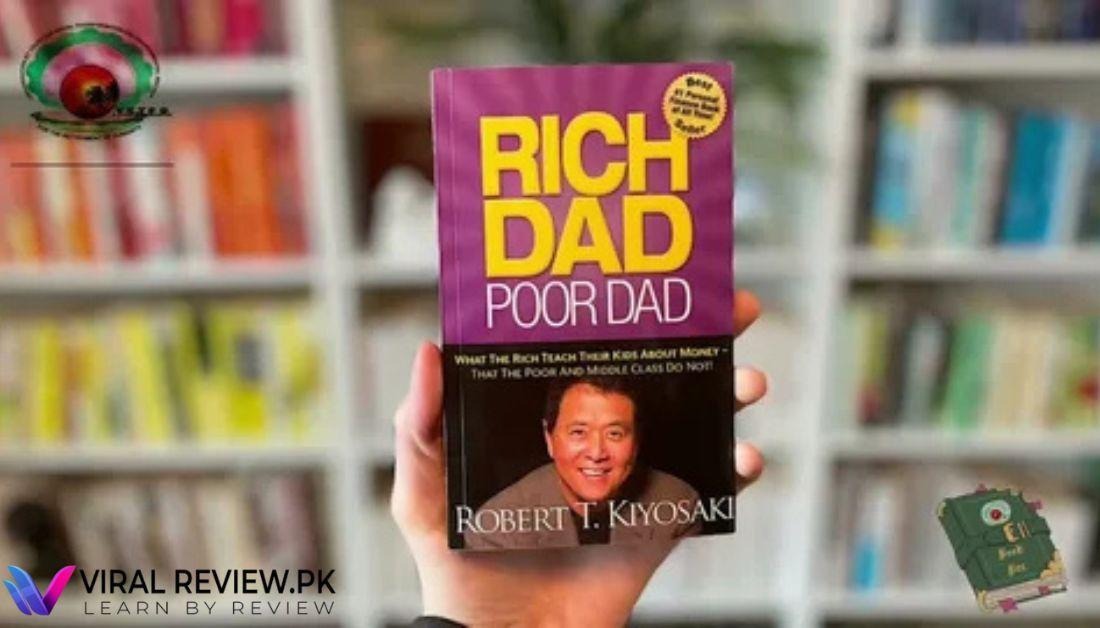
Rich Dad Poor Dad by Robert Kiyosaki is not just a personal finance book—it’s a mindset shift. Instead of focusing on traditional ideas like job security and saving money, the book challenges readers to rethink how wealth is built in the real world. Through the contrasting lessons of two father figures—one rich, one poor—Kiyosaki reveals how beliefs about money can shape an entire financial future.
At its core, the book highlights the difference between working for money and making money work for you. It introduces powerful concepts such as assets vs. liabilities, financial intelligence, and the importance of entrepreneurship and investing. These lessons push readers to move beyond fear, comfort zones, and outdated advice that often keeps people stuck in financial struggle.
What makes Rich Dad Poor Dad truly impactful is its simplicity. The ideas are easy to understand yet deeply transformative when applied. Whether you’re a student, employee, or aspiring entrepreneur, the book offers timeless principles that encourage independence, confidence, and long-term financial growth. It doesn’t promise quick riches—but it does promise clarity, direction, and a new way to see money.
What if everything you were taught about money was quietly holding you back? Rich Dad Poor Dad dares to ask the uncomfortable questions—why do the educated struggle financially, while others build wealth without high salaries? With bold ideas, real-life lessons, and mindset-shaking truths, this book grabs your attention from the very first page. It doesn’t whisper about financial freedom—it challenges you to chase it. If you’re tired of living paycheck to paycheck and ready to rewrite your money story, this book might just be the spark that changes everything.
The Power of Financial Mindset
How your thoughts about money determine your financial destiny.
A financial mindset is the foundation of every money decision a person makes. In Rich Dad Poor Dad, Robert Kiyosaki explains that wealth begins in the mind long before it appears in the bank account. People with a poor financial mindset often believe money is scarce, risky, or evil, which leads them to play safe and avoid opportunities. On the other hand, a rich mindset sees money as a tool that can be learned, managed, and multiplied with the right knowledge and attitude. Kiyosaki emphasizes that changing how you think about money can completely change your financial future. Instead of asking, “Can I afford this?” the rich ask, “How can I afford this?” This simple shift encourages creativity, problem-solving, and growth. A strong financial mindset pushes individuals to learn continuously, take calculated risks, and focus on long-term success rather than short-term comfort.
Rich Dad vs Poor Dad Philosophy
Two perspectives on wealth that shape entirely different lives.
The book revolves around two contrasting father figures: Rich Dad and Poor Dad. Poor Dad represents the traditional mindset—study hard, get good grades, find a secure job, and save money. While this approach offers stability, it often limits financial growth. Poor Dad believes that job security is the ultimate goal, even if it means working hard for money all your life. Rich Dad, however, promotes a completely different philosophy. He teaches that financial freedom comes from understanding money, investing wisely, and owning assets. Rich Dad believes in learning through experience, taking risks, and building systems that generate income. These two philosophies highlight how beliefs and advice shape financial outcomes. The book encourages readers to question traditional thinking and adopt principles that lead to independence and wealth creation.
Assets Make You Rich, Not Income
Understanding the real difference between assets and liabilities.
One of the most powerful lessons in Rich Dad Poor Dad is the clear distinction between assets and liabilities. Kiyosaki explains that many people think high income makes them rich, but in reality, wealth comes from acquiring assets. Assets are things that put money into your pocket, such as rental property, businesses, stocks, or intellectual property.Liabilities, on the other hand, take money out of your pocket. Many items people believe are assets—like expensive cars or large houses—often turn out to be liabilities due to maintenance and loan payments. The book stresses that focusing on building assets creates passive income and long-term stability. This lesson encourages readers to rethink spending habits and prioritize investments that generate cash flow and financial security.

Why Schools Don’t Teach Money
The hidden gap in traditional education that keeps people financially stuck.
Kiyosaki strongly criticizes the traditional education system for ignoring financial education. Schools focus on academic subjects but rarely teach students how money works in real life. As a result, many highly educated individuals struggle financially despite earning good salaries. They lack knowledge about investing, taxes, and asset-building.The book argues that financial literacy is just as important as academic success. Without it, people become dependent on jobs and vulnerable to financial stress. Kiyosaki encourages self-education through books, mentors, and real-world experience. Learning about money independently empowers individuals to make smarter decisions, avoid debt traps, and create wealth beyond a monthly paycheck.
Make Money Work for You
Escaping the cycle of earning and spending through smart investing.
Most people spend their lives working hard for money, trading time for income. Rich Dad Poor Dad challenges this approach by teaching readers to make money work for them. This means investing in assets that generate income even when you are not actively working.
Kiyosaki explains that relying only on a salary is risky and limiting. Smart investing allows money to grow through businesses, real estate, and other income-generating ventures. Over time, this creates passive income streams that reduce dependence on jobs. The ultimate goal is financial freedom—having enough assets to support your lifestyle without constant work.
The Role of Financial Intelligence
Why knowledge and skills matter more than a high salary.
Financial intelligence refers to the ability to understand and manage money effectively. Kiyosaki believes that financial intelligence is more valuable than a high-paying job. Without knowledge, even large incomes can disappear due to poor decisions, debt, and lifestyle inflation.
The book highlights skills such as accounting, investing, market understanding, and risk management. Developing these skills helps individuals spot opportunities and avoid common financial mistakes. Financial intelligence grows through learning, experience, and failure. Those who continuously educate themselves are better prepared to build wealth and adapt to changing economic conditions.
Overcoming Fear and Risk
How the rich think differently about failure and uncertainty.
Fear of losing money holds many people back from investing and growing financially. Rich Dad Poor Dad explains that fear is natural, but avoiding risk completely prevents success. The rich learn to manage fear rather than letting it control their decisions.
Kiyosaki teaches that failure is part of learning. Instead of seeing mistakes as losses, the wealthy view them as lessons. By taking calculated risks and learning from experience, individuals build confidence and resilience. Overcoming fear allows people to seize opportunities that others avoid, leading to long-term financial growth.
The Importance of Entrepreneurship
Building wealth by creating value, not just working for wages.
Entrepreneurship plays a key role in Kiyosaki’s wealth philosophy. While jobs provide income, businesses create systems that generate wealth. Entrepreneurs focus on building products, services, and ideas that serve others and produce income beyond personal effort.
The book encourages readers to think like owners rather than employees. Even small side businesses can become valuable assets over time. Entrepreneurship teaches problem-solving, leadership, and financial independence. By creating value and owning systems, individuals gain control over their financial future instead of depending solely on employers.
Taxes and the Power of Corporations
How the wealthy legally protect and grow their money.
Kiyosaki explains that the rich understand tax laws better than the poor and middle class. Through corporations and businesses, the wealthy can legally reduce taxes and protect income. Employees earn money first and pay taxes later, while business owners often pay expenses before taxes.
This knowledge allows the rich to keep more of what they earn and reinvest it into assets. The book emphasizes learning how legal structures work rather than avoiding taxes out of fear. Understanding taxes is a powerful tool for wealth preservation and growth.
From Job Security to Financial Freedom
Shifting from comfort-driven choices to wealth-building decisions.
Many people prioritize job security because it feels safe and predictable. However, Rich Dad Poor Dad argues that job security can be an illusion. Layoffs, inflation, and economic changes can quickly disrupt even stable careers.
Kiyosaki encourages readers to aim for financial freedom instead of comfort. This means building assets, learning continuously, and taking responsibility for one’s financial future. Financial freedom offers flexibility, peace of mind, and independence. By shifting focus from security to growth, individuals can create a life driven by choice rather than necessity.

General Points about Rich Dad vs Poor Dad
- Simple Language, Powerful Message
- The book uses easy-to-understand language, making complex financial concepts accessible even for beginners.
- Real-Life Storytelling Approach
- Lessons are delivered through relatable life experiences rather than boring financial theories.
- Mindset-Focused Rather Than Math-Based
- It emphasizes how you think about money more than formulas or calculations.
- Encourages Financial Independence
- The book pushes readers to rely less on jobs and more on assets and investments.
- Challenges Traditional Beliefs
- It questions long-held ideas about education, employment, and job security.
- Suitable for All Age Groups
- Students, employees, entrepreneurs, and retirees can all benefit from its lessons.
- Motivational and Thought-Provoking
- Each chapter inspires readers to reflect on their own financial habits and goals.
- Promotes Learning Through Experience
- The book values real-world learning over classroom-only education.
- Focus on Long-Term Wealth, Not Quick Riches
- It discourages shortcuts and highlights patience and discipline.
- Globally Relevant Lessons
- The principles apply across countries, cultures, and economic systems.
- Action-Oriented Insights
- Readers are encouraged to take small but meaningful financial steps.
- Builds Confidence Around Money
- It removes fear and confusion, replacing them with clarity and control.
Why You should READ Rich Dad Poor Dad?
Rich Dad Poor Dad is more than a finance book—it is a wake-up call for anyone who wants control over their financial future. Its simple language and story-driven approach make complex money concepts easy to understand, even for beginners. Instead of focusing on salaries and savings alone, the book shifts attention toward mindset, financial education, and asset-building. It challenges traditional beliefs about education and job security, encouraging readers to think independently and act strategically. The lessons are practical, motivational, and relevant across all age groups and professions. By promoting long-term thinking, real-world learning, and confidence around money, the book empowers readers to move from financial confusion to clarity. Anyone seeking financial independence, smarter decision-making, and a new perspective on wealth will find this book deeply valuable.
Frequently Asked Questions (FAQs)
What is Rich Dad Poor Dad about?
It teaches the importance of financial mindset and wealth-building through real-life experiences. The book contrasts two ways of thinking about money—one focused on job security and the other on financial independence.
Is this book good for beginners?
Yes. It’s written in simple, easy-to-understand language and uses relatable examples, making it ideal for readers with little or no financial background.
Does the book teach investing?
It introduces investment thinking and awareness rather than step-by-step technical investing. The focus is on understanding opportunities, risks, and long-term wealth behavior.
Who should read Rich Dad Poor Dad?
Students, employees, entrepreneurs, and anyone who wants to improve their financial knowledge and work toward financial freedom can benefit from this book.
What is the main lesson of the book?
The core message is to build assets, not liabilities, because assets generate income and help grow wealth over time.
Is the book motivational or practical?
It is both. The book is highly motivational while also offering practical, mindset-driven insights that change how readers think about money.
Does it promote quitting jobs?
No. The book encourages building assets alongside your current income rather than relying on a single paycheck.
Why is the book so popular worldwide?
Because its lessons are simple, bold, and universally relevant. People across cultures connect with its clear message about financial independence.

Rich Dad vs Poor Dad – Comparison Table
Final Thoughts
Rich Dad Poor Dad leaves readers with a powerful realization: financial success is not about how much money you earn, but how well you understand and manage it. The book challenges traditional thinking and pushes readers to take responsibility for their financial future. By focusing on mindset, financial education, and asset-building, it opens the door to long-term wealth and independence. Its lessons encourage curiosity, courage, and continuous learning—qualities essential in today’s fast-changing world.

Quote of Inspiration
The poor and the middle-class work for money. The rich have money work for them.